The imarku Paring Knife 3.5 Inch review is for cooks looking for a compact blade for peeling, slicing, dicing, and other close work with fruit and vegetables.
Its high-carbon stainless steel construction and Pakkawood handle make it a focused option for everyday detail prep, with hand washing part of its care routine.
imarku Paring Knife Review Summary
The quick verdict
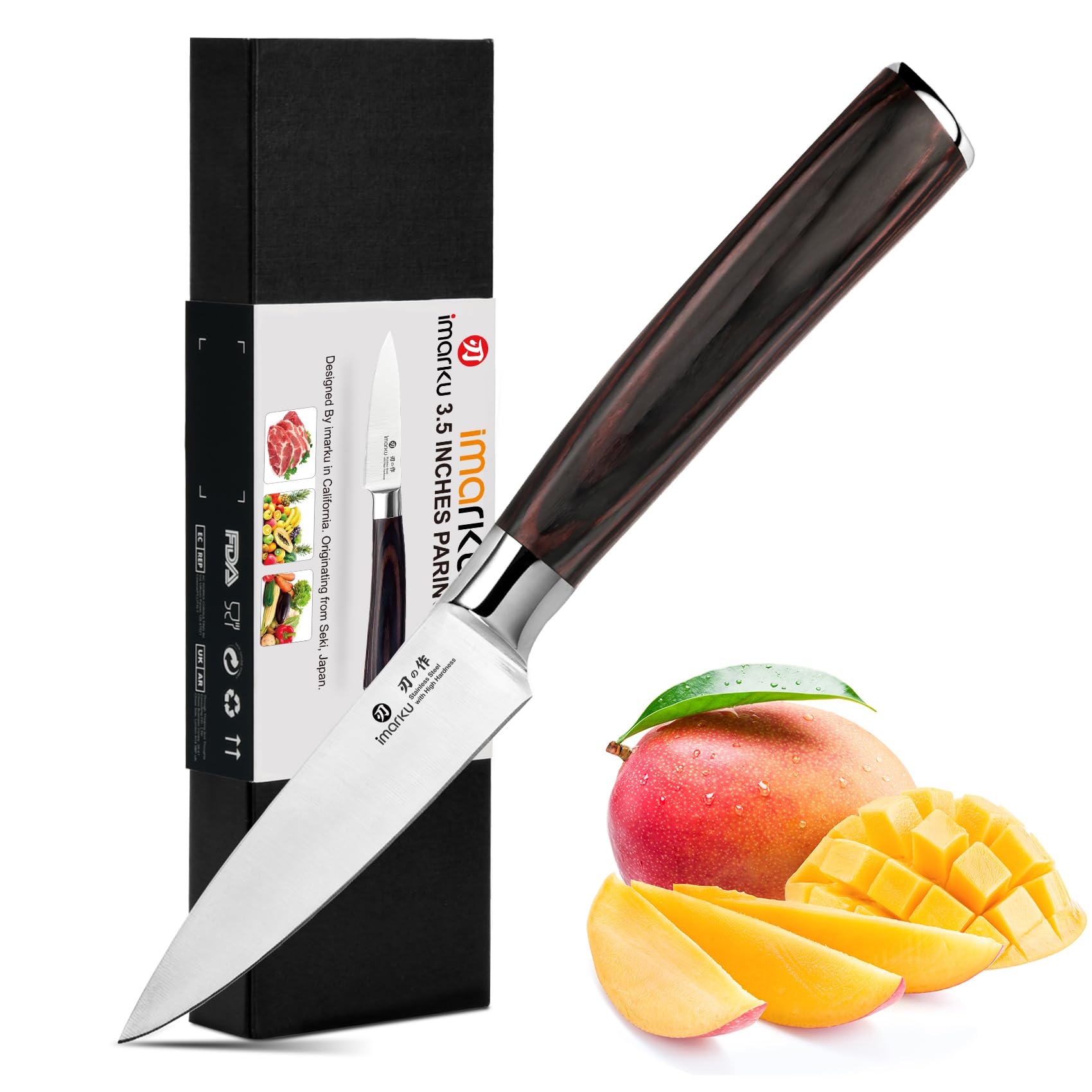
600+ ratings
Read Amazon Reviewsimarku 3.5-Inch Paring Knife
A compact paring knife for cooks who want a high-carbon stainless steel blade and Pakkawood handle for detailed fruit and vegetable preparation.
- 3.5-inch paring blade for compact, close-control preparation.
- Japanese high-carbon stainless steel, with carbon content listed as 0.6–0.75 g.
- Forged through a high-temperature process; the description gives a hardness of 58 on the Rockwell scale.
- Hand-polished cutting edge with a 9–15-degree angle per side and a taper-ground design.

Pros
- Compact blade is suited to precise peeling, trimming, and small-ingredient prep.
- The description provides specific blade details, including steel type, hardness, and edge angle.
Consider before buying
- The knife is not designed to replace a longer blade for large ingredients or broad chopping tasks.
- Dishwasher cleaning is discouraged, so buyers should expect to hand wash it.
Read the full review summary
At 3.5 inches, this knife is sized for controlled tasks where a large chef’s knife can feel cumbersome.
The product description lists a hand-polished edge sharpened to 9–15 degrees per side, a taper-ground blade, and steel with a stated hardness of 58 on the Rockwell scale.
Those details point to a knife designed around a fine edge and maneuverability.
The Pakkawood handle is intended to provide a comfortable hold during repeated work, and the knife is described for chopping, slicing, peeling, dicing, and mincing fruit and vegetables.
It may suit a home cook who wants a dedicated small knife and is comfortable washing it by hand. Its compact blade is a complement to broader kitchen knives, not a replacement for them.
The buying factors
imarku Paring Knife Scorecard
Editorial scores reflect listed features and buyer fit; they are not laboratory measurements or customer ratings.
Detail-work fit
The 3.5-inch blade is purpose-sized for close control when peeling and preparing smaller ingredients.
Edge design
The hand-polished 9–15-degree-per-side edge and taper-ground design emphasize precision, though these details do not establish how the edge performs over time.
Material information
The description specifies high-carbon stainless steel and a Rockwell hardness figure, giving buyers useful blade details.
Handle comfort
Pakkawood is presented as a comfortable, stable handle material, but fit and grip remain personal.
Task versatility
It is described for several fruit and vegetable prep tasks, while the short blade naturally favors smaller work.
Care convenience
The stated instruction not to use a dishwasher means hand washing is part of ownership.
Key Features and Specifications of imarku Paring Knife
- 3.5-inch paring blade for compact, close-control preparation.
- Japanese high-carbon stainless steel, with carbon content listed as 0.6–0.75 g.
- Forged through a high-temperature process; the description gives a hardness of 58 on the Rockwell scale.
- Hand-polished cutting edge with a 9–15-degree angle per side and a taper-ground design.
- Pakkawood handle described as comfortable, strong, and stable.
- Intended for chopping, slicing, peeling, dicing, and mincing fruit and vegetables.
- Hand wash care: the description says not to clean it in a dishwasher.
Pros and Cons of imarku Paring Knife
Pros
- Compact blade is suited to precise peeling, trimming, and small-ingredient prep.
- The description provides specific blade details, including steel type, hardness, and edge angle.
- Pakkawood handle offers a traditional material choice for a small kitchen knife.
- Versatile enough for several everyday fruit and vegetable tasks.
Consider before buying
- The knife is not designed to replace a longer blade for large ingredients or broad chopping tasks.
- Dishwasher cleaning is discouraged, so buyers should expect to hand wash it.
- The description does not specify the knife’s weight or dimensions beyond its 3.5-inch blade; buyers who prioritize a particular balance or handle feel should check those details before choosing.
Who Should Buy imarku Paring Knife?
Good fit
Consider it if you regularly peel fruit, trim vegetables, or make small, precise cuts and want a dedicated paring knife.
The 3.5-inch blade, fine edge geometry, and Pakkawood handle make a clear case for detail-oriented prep rather than general-purpose chopping.
It may also suit cooks who value a compact knife with stated steel and hardness details and do not mind washing it by hand.
If handle fit matters to you, compare the grip dimensions in person or confirm them with the seller before buying.
Who should skip it
Skip it if you want one knife to handle everything from small peeling jobs to large chopping tasks. A paring knife’s short blade is better treated as a companion to a full-size kitchen knife.
Look elsewhere if dishwasher cleanup is essential to your routine; this knife’s care instructions call for avoiding the dishwasher.
How the imarku Paring Knife Fits Everyday Prep
A short blade for close control
The 3.5-inch format is the central buying consideration. It can be easier to maneuver around small ingredients and for peeling or trimming, while its limited reach makes it less suited to long slices or larger board tasks.
Think about whether your prep includes enough detail work to justify keeping a dedicated small knife within reach.
What the edge details tell you
The listed 9–15-degree edge per side, hand polishing, and taper-ground design describe a narrow, precision-oriented edge.
The stated Rockwell hardness of 58 adds material context, but it does not by itself tell you how often the knife will need sharpening in your kitchen. Cutting surfaces, use, and maintenance all shape the ownership experience.
Handle material and daily care
Pakkawood is the handle material, and the description emphasizes comfort and stability during extended holding. Since hand size and grip style vary, those qualities are best treated as design aims rather than a guarantee of fit.
The explicit dishwasher warning is more practical: plan to wash and dry the knife by hand as part of routine cleanup.
A specialist within a knife collection
This knife is intended for fruit and vegetable prep, including peeling, dicing, and mincing.
That range covers many small jobs, but a compact paring blade is most useful alongside a longer knife for larger ingredients and heavier board work. Buyers should assess it as a focused addition to their kitchen tools.
Alternatives to imarku Paring Knife
Paring Knives alternative
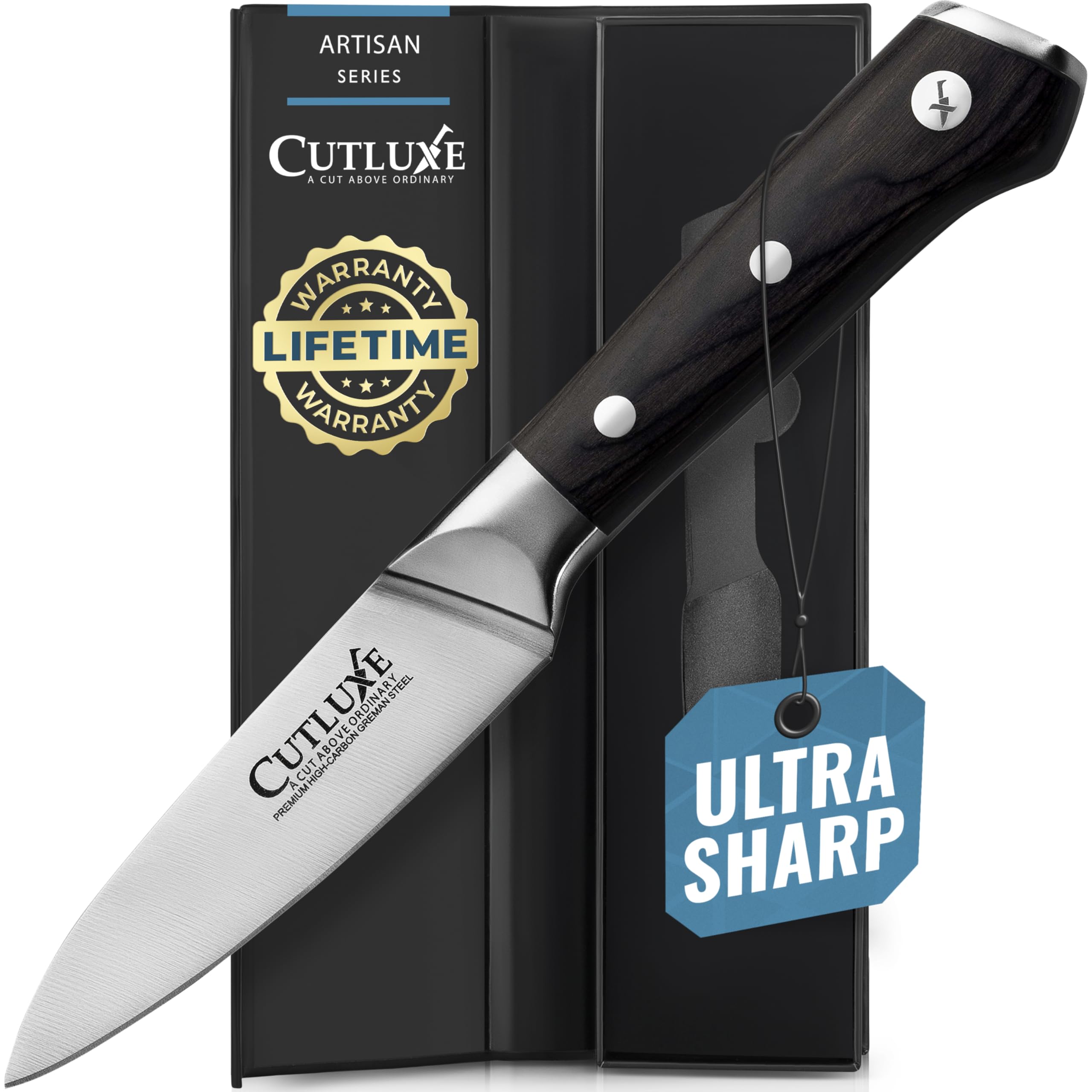
1,000+ ratings
Read Amazon ReviewsCutluxe 3.5-Inch Paring Knife
Compare the two if you want a similar compact knife with Pakkawood.
The imarku’s stated hardness is 58, while the Cutluxe description specifies full-tang construction and a different steel origin; choose based on which construction details matter more to you.
- The Cutluxe is also a 3.5-inch paring knife, with high-carbon German steel listed at 56+ Rockwell hardness, a full-tang triple-riveted Pakkawood handle, and a 14–16-degree edge per side.
- The imarku pairs a 3.5-inch blade with Japanese high-carbon stainless steel, a Pakkawood handle, and a stated 9–15-degree edge angle per side.
Paring Knives alternative
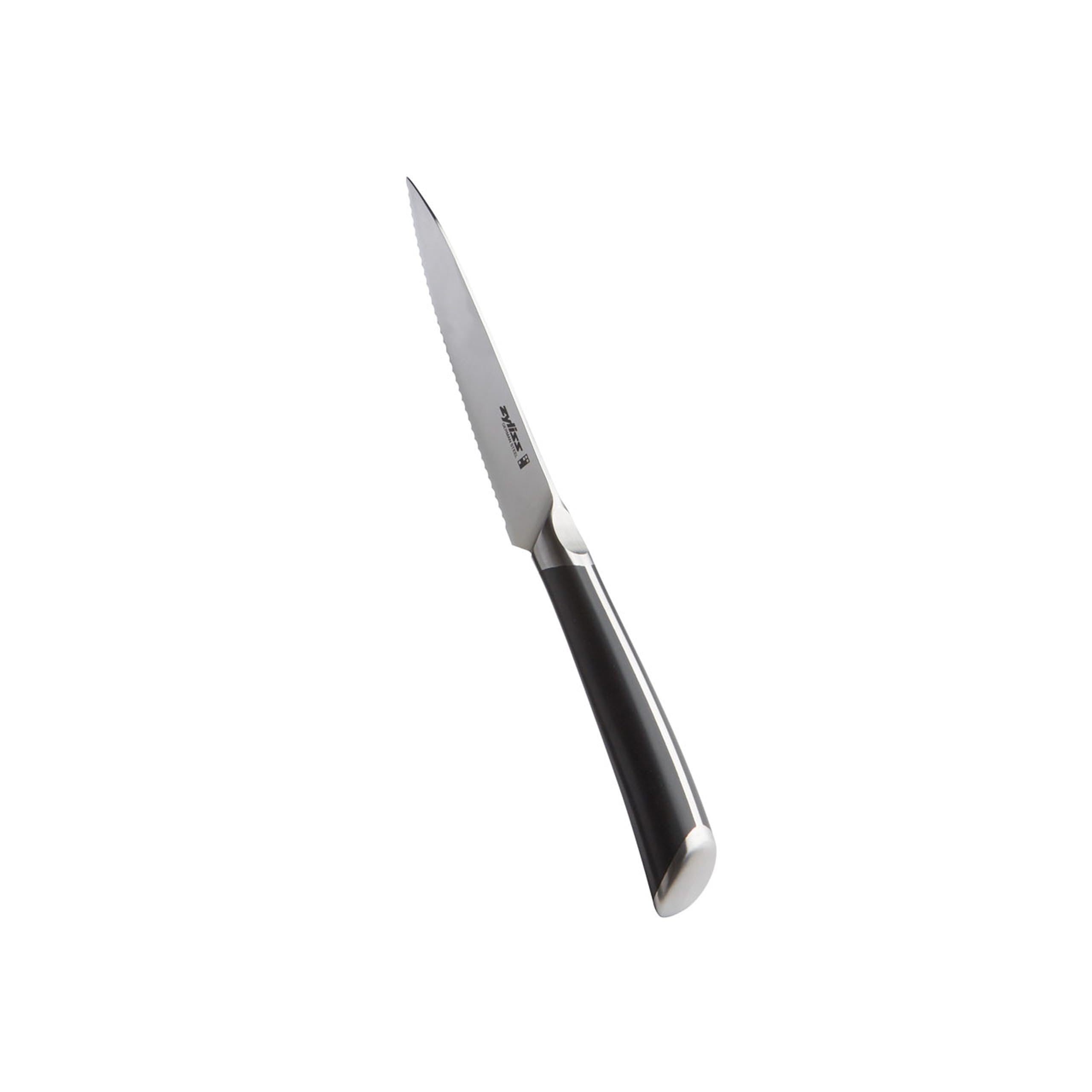
100+ ratings
Read Amazon ReviewsZyliss Comfort Pro Serrated Paring Knife
Choose the imarku for compact, plain-edge detail work; consider the Zyliss if a longer serrated blade better suits foods such as tomatoes or bread. Their blade lengths and edge styles address different prep preferences.
- The Zyliss is a 4.5-inch serrated knife intended for tomatoes, vegetables, and bread, with ice-hardened German stainless steel and a full-tang design.
- The imarku has a plain-edge 3.5-inch format described for peeling, slicing, dicing, and mincing fruit and vegetables.
Is imarku Paring Knife Worth It?
The imarku 3.5-Inch Paring Knife is worth considering if your kitchen routine includes frequent peeling, trimming, and other small fruit and vegetable tasks.
Its compact size, specified edge geometry, high-carbon stainless steel, and Pakkawood handle make it a purpose-built detail knife.
Buy it as a specialist tool if you are comfortable with hand washing and already have a longer knife for larger jobs.
If you want dishwasher cleanup or a blade with more reach, compare alternatives with those needs in mind.
Your review at a glance
600+ ratings
Read Amazon Reviewsimarku 3.5-Inch Paring Knife
A compact paring knife for cooks who want a high-carbon stainless steel blade and Pakkawood handle for detailed fruit and vegetable preparation.
- 3.5-inch paring blade for compact, close-control preparation.
- Japanese high-carbon stainless steel, with carbon content listed as 0.6–0.75 g.
- Forged through a high-temperature process; the description gives a hardness of 58 on the Rockwell scale.
- Hand-polished cutting edge with a 9–15-degree angle per side and a taper-ground design.