The best chef knives balance a useful blade length with a grip and edge style that suit your everyday prep. These picks range from lighter 8-inch blades to compact and specialized shapes, so consider your cutting habits and storage needs before choosing.
Quick Top Products
Messermeister Oliva Elite Stealth 8-Inch Chef's Knife
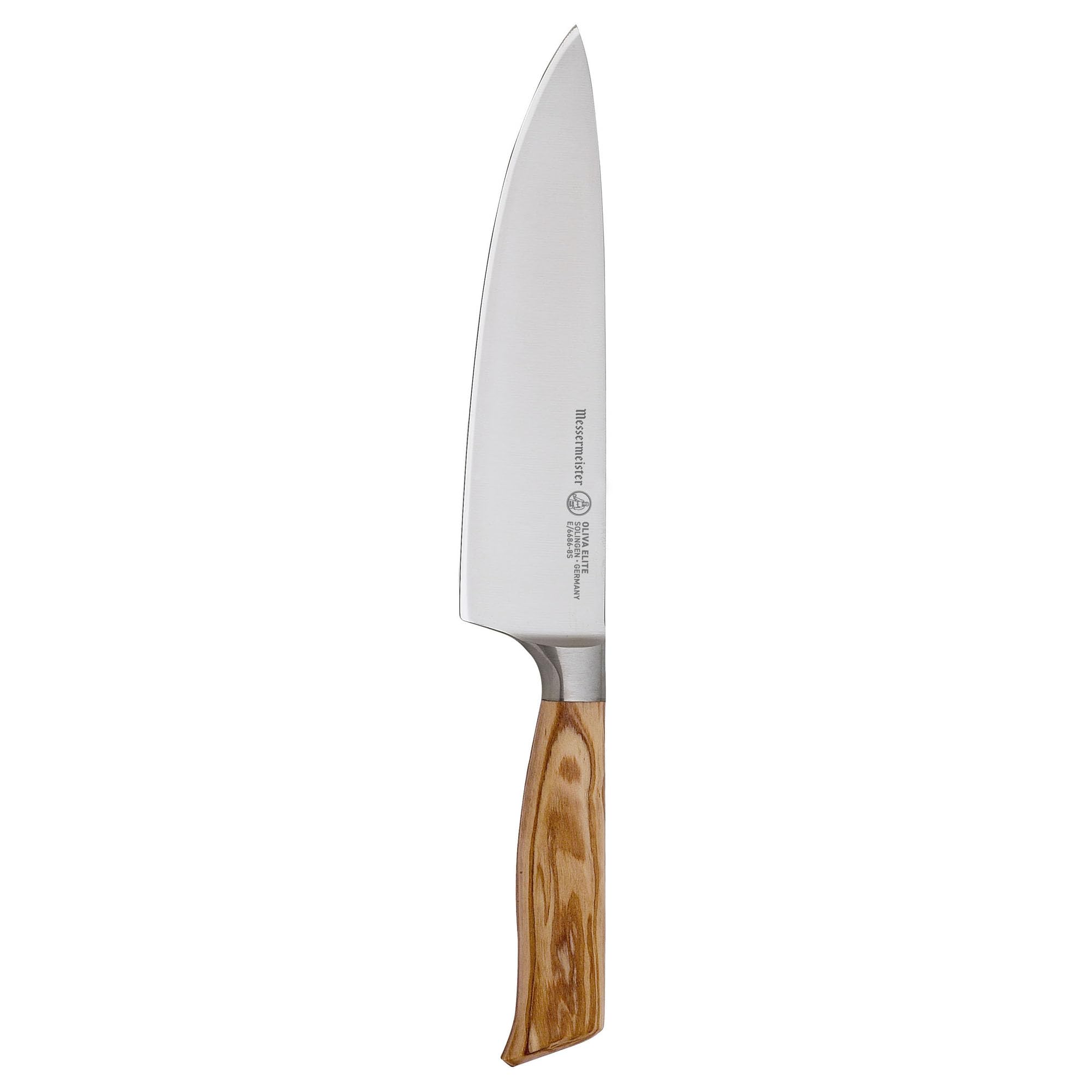
- 8-inch blade with a 15-degree edge.
- Forged one-piece construction and olive wood handle.
- About 25% thinner and 10% lighter than the traditional chef’s knife.
Best For: Cooks who want a full-size blade with a thinner, lighter build.

KEEMAKE 8-Inch Chef Knife
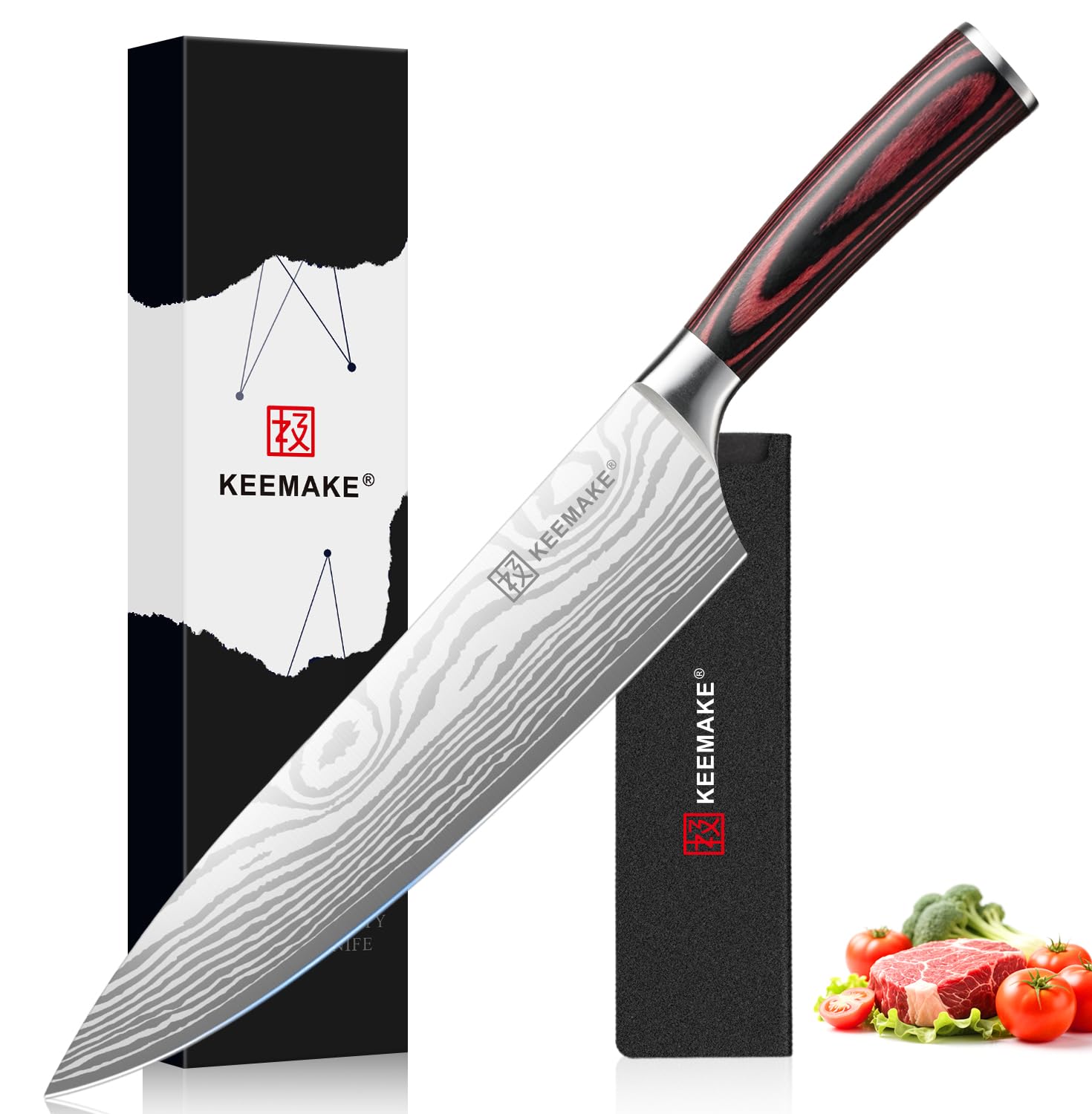
- 8-inch 1.4116 stainless steel blade, rated at 58±2 HRC.
- Pakkawood handle with curved shape and sloped bolster.
- Protective sheath and gift box included.
Best For: Home cooks seeking a full-size all-purpose knife with a protective sheath.
Messermeister Meridian Elite 8-Inch Chef's Knife
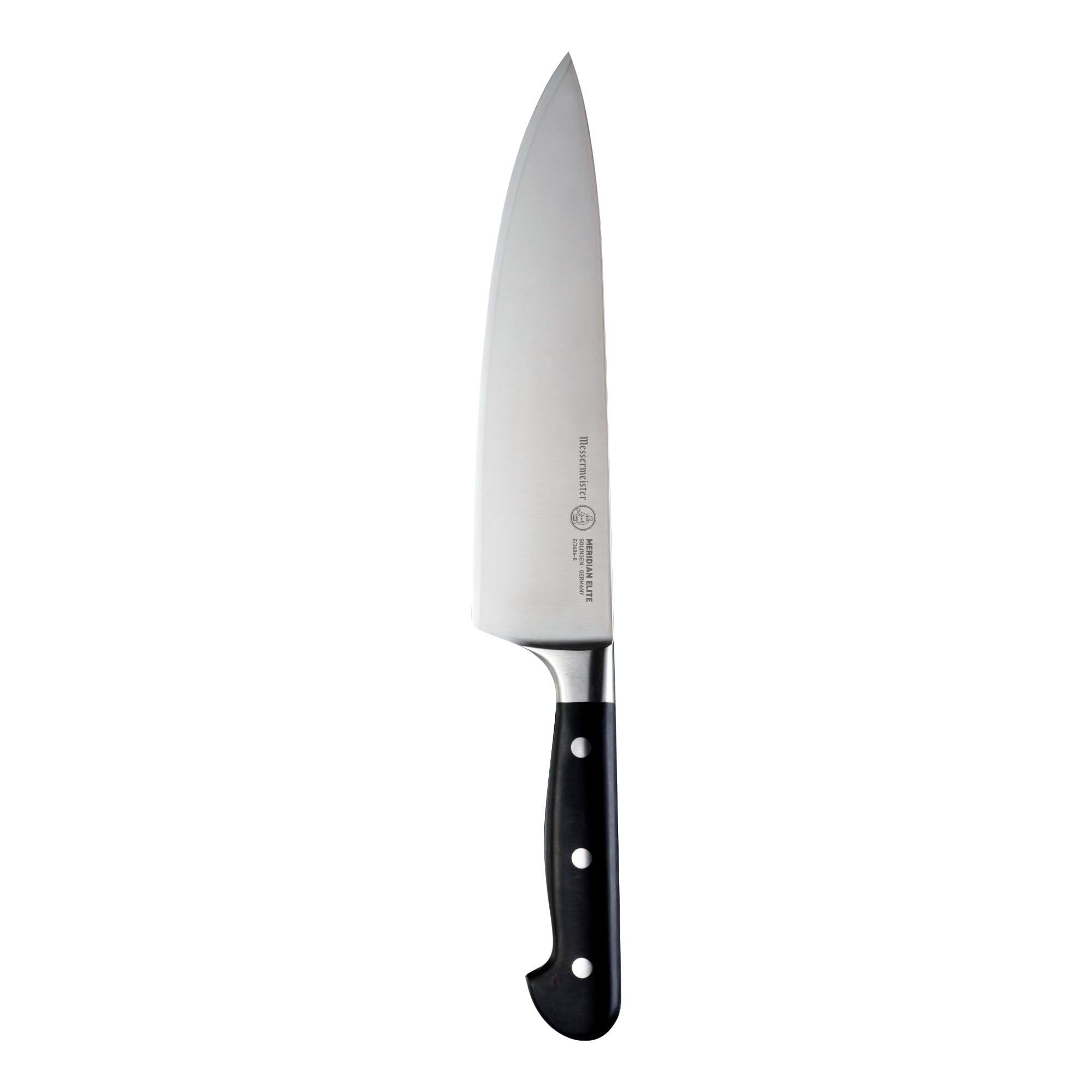
- 8-inch forged German 1.4116 steel blade with a 15-degree edge.
- POM handle with triple rivets and full-exposed tang.
- Bolsterless heel allows use of the full blade edge.
Best For: Cooks who favor a heavier full-size blade and a traditional riveted handle.
imarku 8-Inch Hammered Japanese Chef Knife
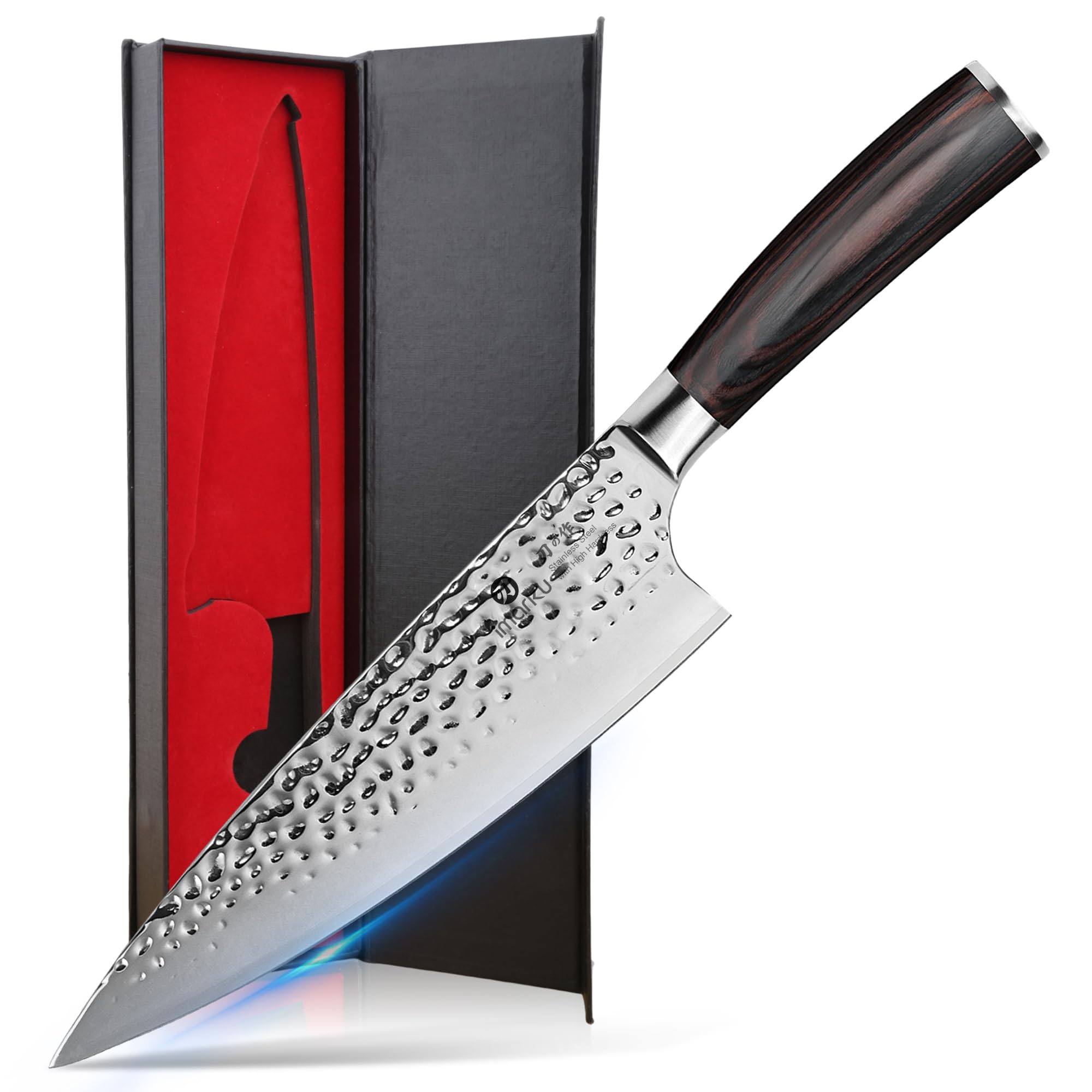
- 8-inch blade with a powder steel edge and hammered finish.
- Rated at 62±1 HRC and sharpened to 13 degrees per side.
- Ambidextrous Pakkawood handle.
Best For: Cooks interested in an 8-inch hammered blade with a powder steel edge.
8-Inch VG10 Damascus Chef Knife
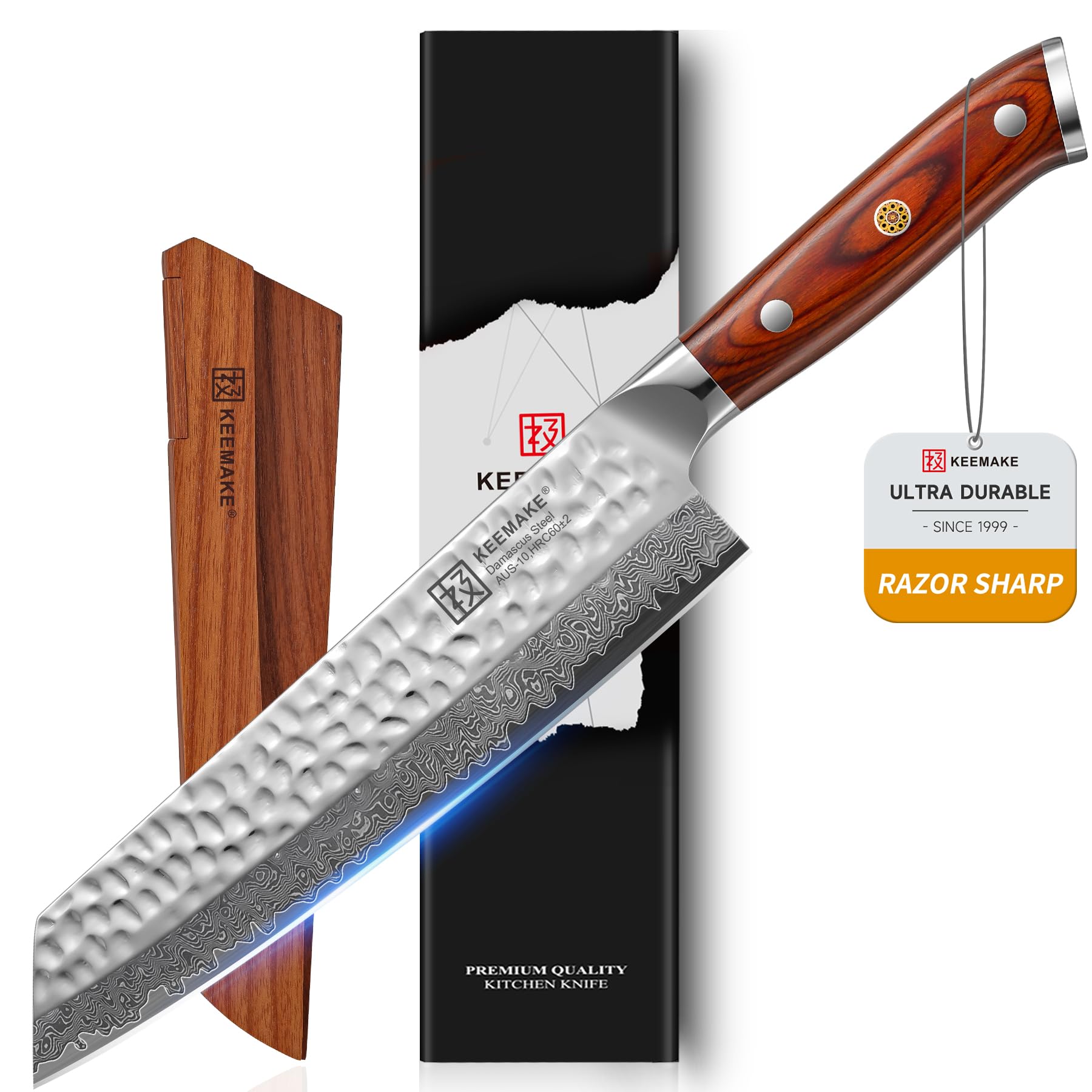
- 8-inch blade with VG10 core and 67-layer Damascus construction.
- Hammered finish and Pakkawood handle with triple-riveted full tang.
- Freestanding ash wood sheath included.
Best For: Cooks who want a Damascus-pattern blade and included upright sheath.
Messermeister Oliva Elite Stealth 9-Inch Chef's Knife
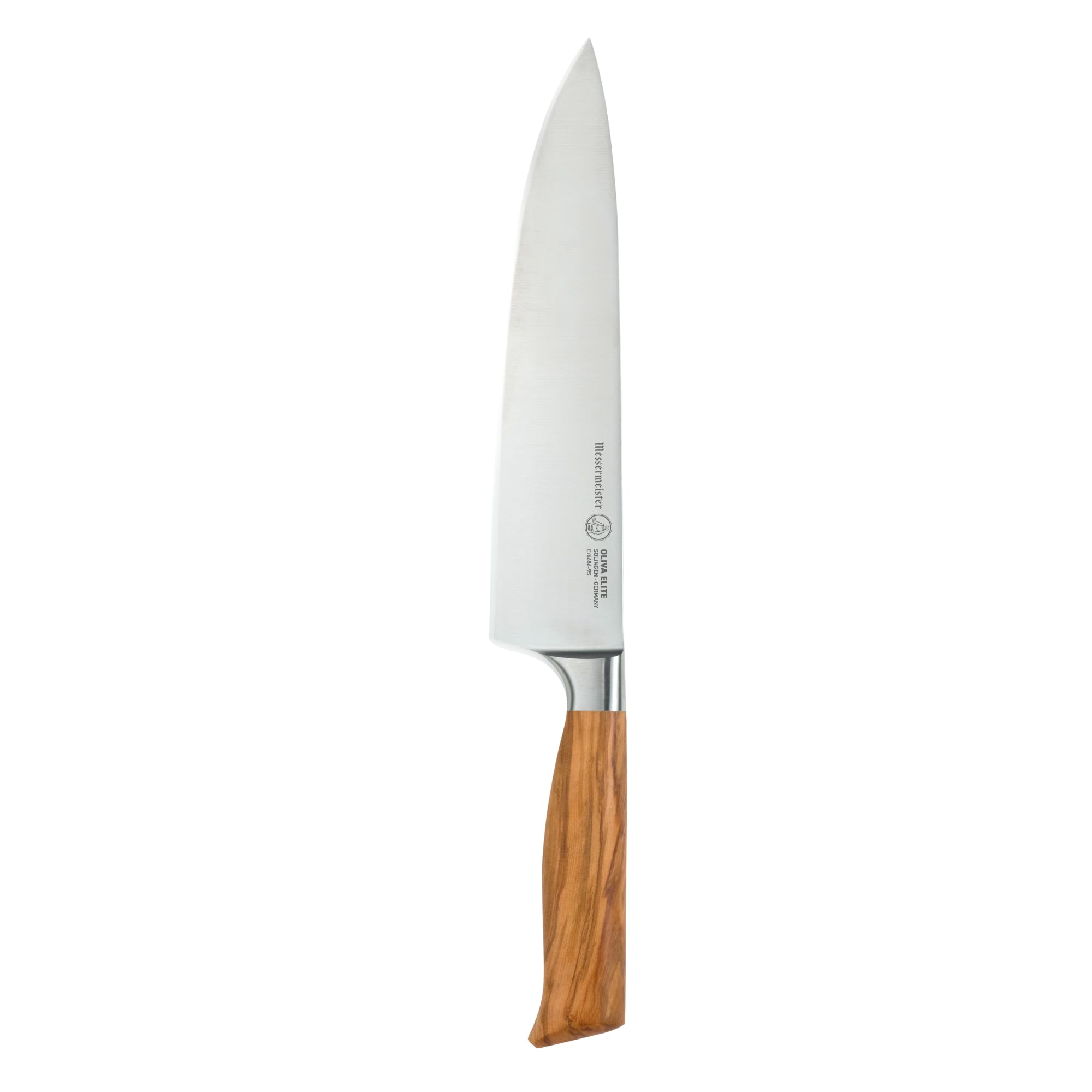
- 9-inch forged German 1.4116 steel blade with a 15-degree edge.
- Olive wood handle and bolsterless heel.
- About 25% thinner and 10% lighter than the traditional chef’s knife.
Best For: Cooks who prefer extra blade length in a relatively thin, light design.
SYOKAMI 7-Inch Cleaver Chef Knife
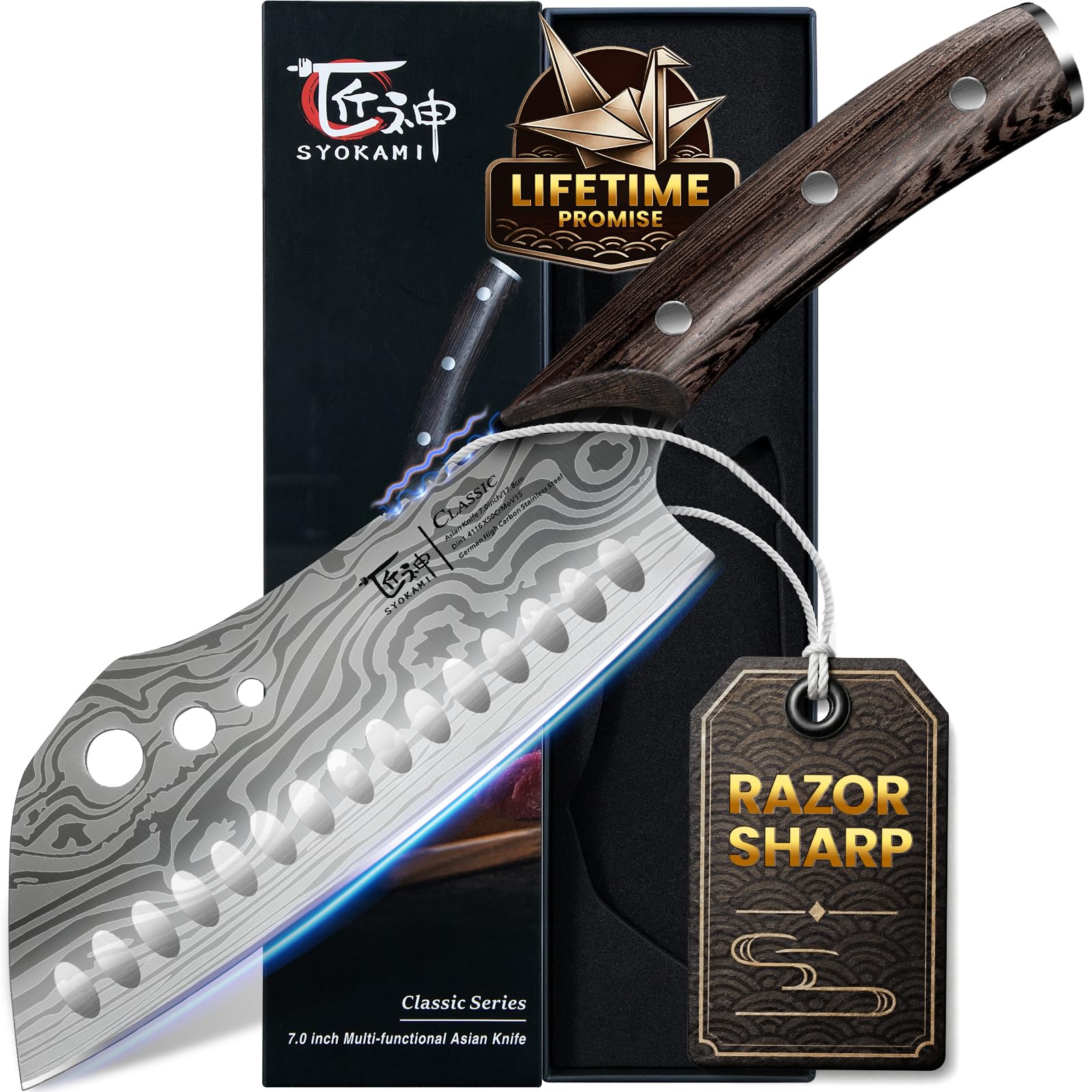
- 7-inch Asian-style blade combining chef knife, santoku, and nakiri traits.
- Three-hole herb stripper for removing leaves from stems.
- Full-tang German steel blade and wenge wood handle.
Best For: Cooks who want a broad Asian-style prep knife with an integrated herb stripper.
Messermeister Meridian Elite 9-Inch Chef's Knife
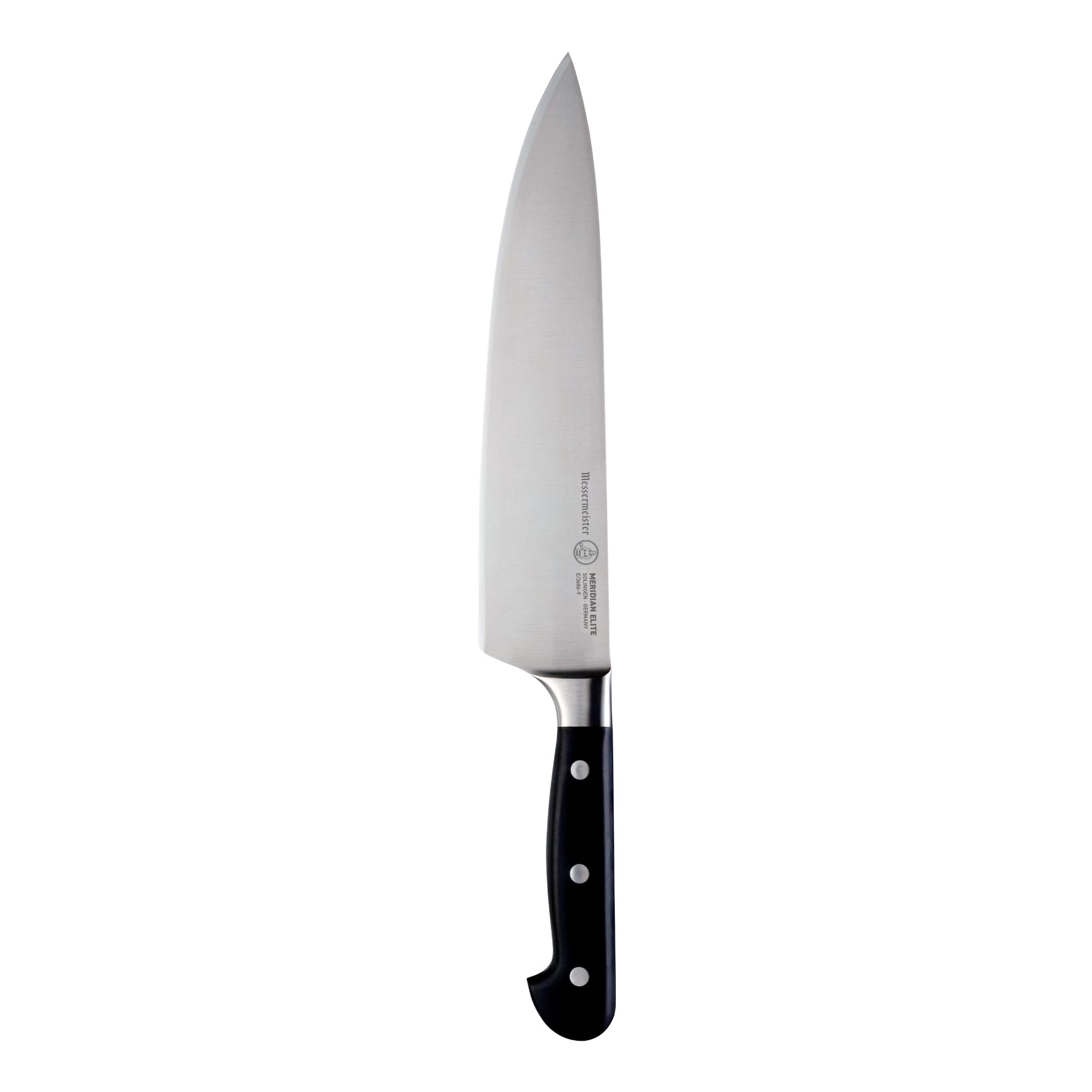
- 9-inch forged German 1.4116 steel blade with 15-degree edge.
- Triple-rivet full-exposed tang and POM handle.
- Bolsterless heel makes the full edge accessible.
Best For: Cooks seeking a longer traditional blade with a full-tang POM handle.
SYOKAMI 8.2-Inch Kiritsuke Chef Knife
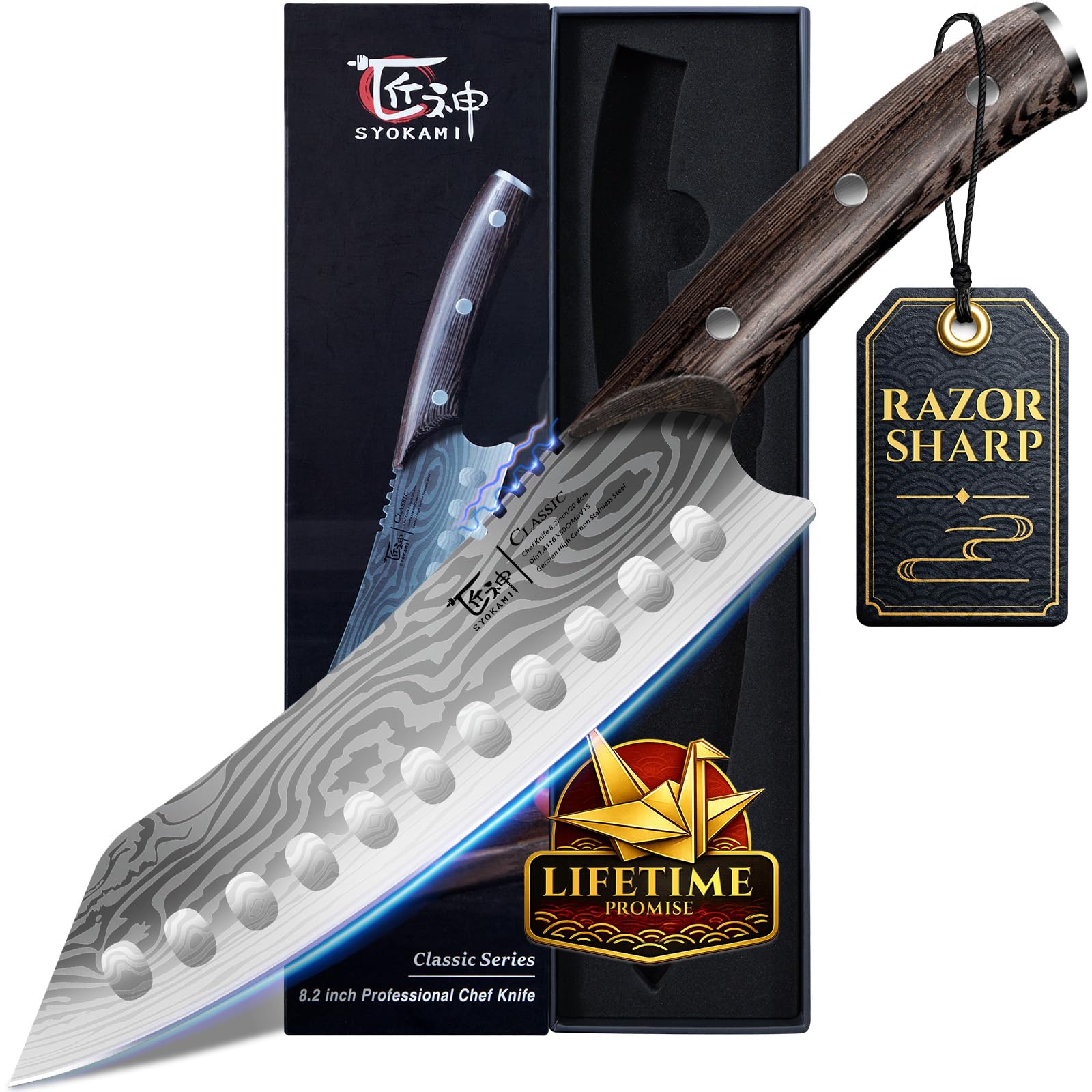
- 8.2-inch kiritsuke-style blade in high-carbon German steel.
- 14–16-degree-per-side edge and 56+ Rockwell rating.
- Full tang, triple-riveted handle, and hand guard.
Best For: Cooks wanting a longer kiritsuke-style knife with a hand guard.
Matsato 6.3-Inch Chef Knife
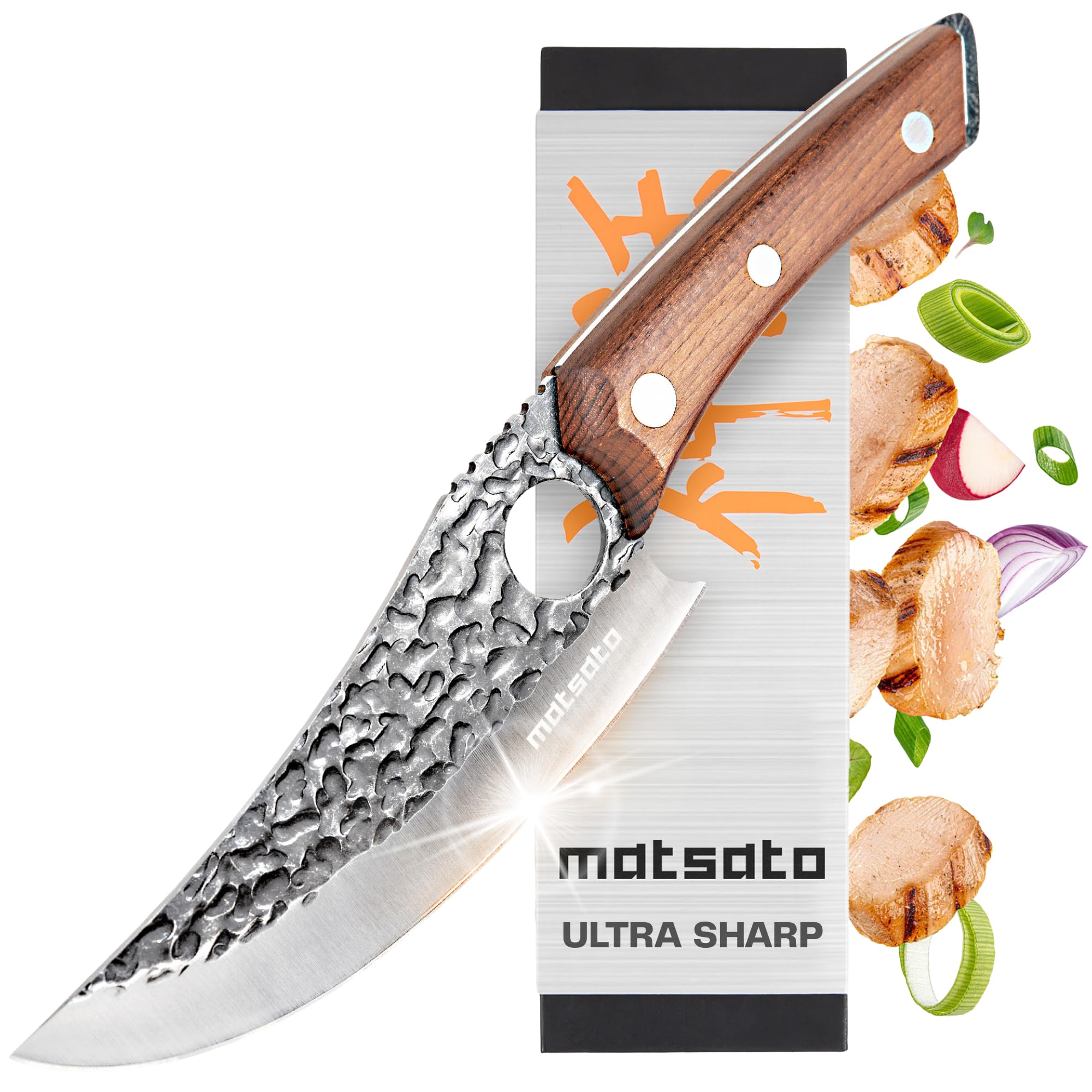
- 6.3-inch blade made from 1.4116 Japanese stainless steel.
- 0.14-inch blade thickness and balanced handle design.
- Hand wash and dry promptly; not dishwasher safe.
Best For: Cooks who prefer a shorter blade for everyday chopping and slicing.
Lighter 8-Inch German-Style Pick
Messermeister Oliva Elite Stealth 8” Chef’s Knife - Fine German Steel Alloy Blade & Natural Mediterranean Olive Wood Handle - Rust Resistant & Easy to Maintain
The Messermeister Oliva Elite Stealth pairs an 8-inch blade with German 1.4116 steel and a natural Mediterranean olive wood handle. Its blade, bolster, and tang are forged as one piece, and the maker describes this Stealth version as about 25% thinner and 10% lighter than its traditional chef’s knife.
A 15-degree edge handles chopping, slicing, and dicing across produce, meat, and fish. The bolsterless heel also leaves the blade usable from heel to tip and simplifies sharpening.
This is a full-size option for cooks who prefer a lighter profile and an olive wood grip.
Best For: Cooks who want a full-size blade with a thinner, lighter build.
| Pros | Cons |
|---|---|
|
|
Choose this model if you want an 8-inch chef knife but favor a thinner, lighter profile over the heavier traditional design. Its bolsterless heel is useful if you sharpen the full length of the edge.
The steel is identified as German 1.4116, and the edge angle is 15 degrees. Before buying, consider whether you prefer olive wood in hand and have storage suited to a full-size blade.
Sheathed 8-Inch Everyday Workhorse
KEEMAKE 8" Chef Knife, Ultra Sharp Kitchen Knife with Ergonomic Handle
KEEMAKE’s 8-inch chef knife uses 1.4116 high-carbon stainless steel with a stated hardness of 58±2 HRC. Its Pakkawood handle has a curved shape and sloped bolster designed for a secure pinch grip.
The edge is hand-sharpened to 8–12 degrees per side, and the knife is intended for chopping, slicing, mincing, and light boning. A protective sheath is included, which gives the blade a cover for storage.
This combination suits cooks looking for a versatile full-size knife and a ready storage accessory; the comparatively acute edge angle is a detail to consider alongside your sharpening preferences.
Best For: Home cooks seeking a full-size all-purpose knife with a protective sheath.
| Pros | Cons |
|---|---|
|
|
This is a practical fit if you want an 8-inch general-purpose blade and prefer having a sheath included. The documented edge is sharpened to 8–12 degrees per side, while the steel is rated at 58±2 HRC; factor those details into how you plan to maintain the edge.
Its intended uses include light boning, but it remains a chef knife rather than a dedicated boning tool. Check that the length and handle shape suit your grip and storage.
Heavier Traditional 8-Inch Option
Messermeister Meridian Elite 8” Traditional Chef’s Knife - Fine German Steel Alloy Blade - Rust Resistant & Easy to Maintain
The Meridian Elite is an 8-inch chef’s knife built around a forged German 1.4116 steel blade and a POM handle with a triple-rivet, full-exposed tang design. Its 15-degree edge is intended for chopping, slicing, and dicing fruits, vegetables, meats, and fish.
Messermeister calls this model heavy-weight and describes balance in the handle, a useful distinction for cooks who prefer a substantial knife. The bolsterless heel makes the full edge accessible for cutting and sharpening.
It is a traditional-style counterpart to lighter, thinner chef knives, so the extra weight should be a deliberate preference.
Best For: Cooks who favor a heavier full-size blade and a traditional riveted handle.
| Pros | Cons |
|---|---|
|
|
Choose the Meridian Elite if a heavier knife feels more natural for your chopping rhythm and you want an 8-inch blade with a traditional riveted handle. Its German steel and 15-degree edge distinguish it from the Japanese-style options in this roundup.
The bolsterless heel also matters if you want to use and sharpen the full edge. Consider the weight and handle material before buying, especially if your preference is a light blade or wood grip.
Hammered Blade With High Hardness
imarku 8 Inch Chef Knife, Hand-Hammered Japanese Kitchen Knife, High Carbon Steel Chef's Knife with Powder Steel Edge, Ultra Sharp Cooking Knife with Ergonomic Handle for Professional & Home Chefs
This imarku chef knife combines an 8-inch Japanese high-carbon stainless steel blade with a powder steel edge and hand-hammered finish. The steel is rated at 62±1 HRC, and the blade is hand-sharpened to 13 degrees per side.
Its 2.3 mm thickness and V-shaped edge are intended for everyday chopping, dicing, and slicing vegetables, fruit, and meat. A Pakkawood handle is shaped for an ergonomic grip and ambidextrous use.
The hammered surface is designed to reduce food adhesion. For a buyer comparing chef knives, its documented hardness and edge angle make it a more specialized choice than the simpler steel-and-handle profiles here.
Best For: Cooks interested in an 8-inch hammered blade with a powder steel edge.
| Pros | Cons |
|---|---|
|
|
Consider this knife if you want a full-size Japanese-style chef knife and value its stated 62±1 HRC hardness, 13-degree-per-side edge, and hammered surface. The Pakkawood handle is described as suitable for either hand, unlike a right-handed-only single-bevel option.
Before choosing, think about how you maintain harder, acute-edged blades and whether your storage setup protects the edge; a sheath is not specified in the provided details.
Damascus Blade With Freestanding Sheath
8 Inch Damascus Chef Knife, Japanese Kitchen Knife with VG10 Steel
This 8-inch Japanese-style chef knife has a VG10 core within a 67-layer Damascus blade and a hammered finish. The notes give a 62 HRC core and also a 60±2 HRC hardness figure, so the precise hardness should be confirmed before purchase.
Its stated edge is 10 degrees, and the knife is shaped as a versatile kiritsuke for vegetables, fruit, meat, and fish. A Pakkawood handle, triple-riveted full tang, and freestanding ash wood sheath round out the design.
The sheath stands upright on a counter and covers the blade. This is a distinctive option if that included storage accessory is useful in your kitchen.
Best For: Cooks who want a Damascus-pattern blade and included upright sheath.
| Pros | Cons |
|---|---|
|
|
Pick this if the included freestanding sheath and layered blade design are priorities. It has an 8-inch kiritsuke profile and is intended for general ingredient prep, with a 10-degree edge given in the details.
The hardness figures differ within the product facts, so confirm that specification if it is central to your decision. The upright sheath may suit counter storage, while buyers who prefer a conventional drawer guard may want another style.
Long 9-Inch Stealth Blade
Messermeister Oliva Elite Stealth 9” Chef’s Knife - Fine German Steel Alloy Blade & Natural Mediterranean Olive Wood Handle - Rust Resistant
The 9-inch Oliva Elite Stealth extends the same general design approach to a longer blade: German 1.4116 steel, a 15-degree edge, and a natural Mediterranean olive wood handle. The blade, bolster, and tang form one hot-drop-forged piece.
It is about 25% thinner and 10% lighter than the maker’s traditional chef’s knife, and the bolsterless heel leaves the whole edge usable for cutting and sharpening. Its length can appeal to cooks who want more blade for slicing and larger prep tasks.
It also requires more working room and storage than an 8-inch knife, so the longer format should fit your kitchen habits.
Best For: Cooks who prefer extra blade length in a relatively thin, light design.
| Pros | Cons |
|---|---|
|
|
Choose the 9-inch Stealth when you specifically want a longer blade but still prefer a lighter, thinner profile. Its German steel, 15-degree edge, and bolsterless heel parallel the 8-inch Oliva model, with blade length as the main practical difference.
Make sure your cutting board and storage can accommodate the added length. If you usually work in a compact kitchen or favor nimble short strokes, an 8-inch or 6-inch option may be easier to handle.
Herb-Stripping Asian Utility Shape
SYOKAMI Cleaver Chef Knife with Herb Stripper, 7" Asian Kitchen Knife 3-in-1 Combined with Chef's Knife, Santoku, Nakiri for Slicing, Chopping, Dicing, Mincing, Housewarming Birthday Cooking Gifts
SYOKAMI’s 7-inch Asian knife combines traits associated with Chinese chef’s knives, santoku, and nakiri shapes, with three holes in the blade for stripping herb leaves from stems. The full-tang blade uses high-carbon German steel, is hand-polished to 14–16 degrees per side, and is rated at 56+ Rockwell hardness.
Its wenge wood handle has gear-tooth detailing intended to support grip, including when wet. This shape offers a different feel from a longer Western-style chef knife, while the herb stripper adds a specific prep function.
Consider it if greens and herbs are common in your cooking and you prefer a compact, broad blade.
Best For: Cooks who want a broad Asian-style prep knife with an integrated herb stripper.
| Pros | Cons |
|---|---|
|
|
This SYOKAMI is a good category fit for cooks who want a versatile prep knife with an herb-stripping feature. Its 7-inch shape is shorter than the 8- and 9-inch chef knives, and the design blends several Asian knife styles.
Check whether you prefer that broader profile and whether the herb holes match the herbs you prepare. The steel is described as stain-resistant, but the facts do not specify a dedicated storage cover.
9-Inch Traditional German Profile
Messermeister Meridian Elite 9” Traditional Chef’s Knife - Fine German Steel Alloy Blade - Rust Resistant & Easy to Maintain
The Meridian Elite 9-inch chef’s knife pairs a longer blade with a triple-rivet, full-exposed tang and POM handle. Its forged German 1.4116 steel blade has a 15-degree edge and is intended for cutting, chopping, slicing, and dicing fruit, vegetables, meat, and fish.
The bolsterless heel lets the cutting edge run through the full heel-to-tip length, which also simplifies sharpening and honing. It follows the traditional, heavier Meridian Elite profile rather than the thinner Stealth design.
That makes it a fit for cooks who want a substantial long knife and do not mind the extra reach at the board.
Best For: Cooks seeking a longer traditional blade with a full-tang POM handle.
| Pros | Cons |
|---|---|
|
|
Consider this model if you want the Meridian Elite construction in a 9-inch length. Compared with the Oliva Elite Stealth, this one has a traditional heavier profile and POM handle rather than an explicitly thinner, lighter build and olive wood.
Its 15-degree edge and bolsterless heel are useful details for routine care. Think about your board space, grip, and preference for knife weight before selecting the longer blade.
Long Kiritsuke With Guarded Grip
SYOKAMI Japanese Kitchen Knife, 8.2 Inch Chef Knife, Carbon Steel Kiritsuke, Razor Sharp Santoku for Precision Cutting, Damascus Pattern, Full Tang Wood Handle, Housewarming Cooking Gifts
This 8.2-inch SYOKAMI kiritsuke uses imported high-carbon German steel, a full-tang construction, and a triple-riveted wenge handle. The blade is hand-polished to 14–16 degrees per side and rated at 56+ Rockwell hardness.
A hand guard sits between blade and handle to help keep the hand from sliding toward the edge, and the grip has gear-tooth detailing. The design is intended for precise cutting and general kitchen prep, though the source’s piercing-performance language is not a useful basis for choosing it.
Its longer kiritsuke shape and guard distinguish it from the 7-inch SYOKAMI with herb-stripper holes.
Best For: Cooks wanting a longer kiritsuke-style knife with a hand guard.
| Pros | Cons |
|---|---|
|
|
Choose this SYOKAMI if you want a longer kiritsuke-style knife with an integrated hand guard and prefer its 8.2-inch reach to the 7-inch herb-stripper model. Both have German steel and a 14–16-degree-per-side edge, but their shapes and functions differ.
The hand guard is a distinguishing design feature; it does not replace careful knife handling. Confirm blade storage before purchase, since a sheath is not specified in the provided details.
Compact 6.3-Inch Everyday Knife
Matsato Chef Knife - Kitchen Knife for Cooking, Chopping. Japanese Steel Knife for Home, BBQ, Balance & Control, 6.3 Inch
The Matsato chef knife has a 6.3-inch blade made from 1.4116 Japanese stainless steel, with a thickness of 0.14 inch. Its solid handle is described as well balanced, and the knife is intended for chopping vegetables, meat, and herbs.
The shorter blade provides an alternative to the many 8- and 9-inch options in this roundup, which can be useful if you prefer a compact profile for ordinary meal preparation. Hand washing and immediate drying are recommended, and it is not dishwasher safe.
This is a straightforward shorter chef knife; detailed edge angle and handle material are not specified in the supplied facts.
Best For: Cooks who prefer a shorter blade for everyday chopping and slicing.
| Pros | Cons |
|---|---|
|
|
This Matsato makes sense if you want a chef knife shorter than the standard 8-inch choices here. Its 6.3-inch blade is intended for common prep, and the specified 1.4116 stainless steel gives a concrete material reference.
The shorter reach is a tradeoff if you often slice large ingredients or want a long rocking stroke. Check how the handle fits your hand, since its material and precise edge angle are not specified.
How to Choose Chef Knives
How We Picked Best Chef Knives
The selection centers on knives intended for broad kitchen prep, including slicing, chopping, and dicing across produce, meat, and fish. We favored records with an identifiable blade length and concrete details about steel, edge, handle, or storage.
That supports useful comparisons between full-size Western profiles, Japanese-style blades, and compact options.
The collection includes 8- and 9-inch blades for cooks who want more reach, along with a 6.3-inch knife for a shorter working profile. Specialized features include a hammered finish, a freestanding sheath, an herb stripper, and a hand guard.
Those features help distinguish use cases without treating a decorative finish or hard steel rating as proof of superior cutting.
Comparing Chef Knives by Blade Length and Shape
Blade length is one of the clearest choices. The 8-inch Messermeister Oliva Elite Stealth is thinner and lighter than its traditional chef knife, while the 8-inch Meridian Elite is described as heavier.
The 9-inch Messermeister options provide more cutting length, which can suit larger ingredients but takes more board and storage space. The 6.3-inch Matsato is the compact alternative.
Shape and edge details also differ. The SYOKAMI 7-inch knife combines Asian-style forms and includes herb-stripping holes; the 8.2-inch SYOKAMI is a kiritsuke with a hand guard. imarku’s 8-inch knife has a hammered finish and a stated 13-degree-per-side edge.
The Damascus 8-inch option includes a freestanding sheath, though its hardness figures conflict. Compare these specifics with your preferred grip, sharpening tools, and storage.
| Product | Standout features | Best for |
|---|---|---|
| Messermeister Oliva Elite Stealth 8-Inch Chef's KnifeCheck Price |
| Cooks who want a full-size blade with a thinner, lighter build. |
| KEEMAKE 8-Inch Chef KnifeCheck Price |
| Home cooks seeking a full-size all-purpose knife with a protective sheath. |
| Messermeister Meridian Elite 8-Inch Chef's KnifeCheck Price |
| Cooks who favor a heavier full-size blade and a traditional riveted handle. |
| imarku 8-Inch Hammered Japanese Chef KnifeCheck Price |
| Cooks interested in an 8-inch hammered blade with a powder steel edge. |
| 8-Inch VG10 Damascus Chef KnifeCheck Price |
| Cooks who want a Damascus-pattern blade and included upright sheath. |
| Messermeister Oliva Elite Stealth 9-Inch Chef's KnifeCheck Price |
| Cooks who prefer extra blade length in a relatively thin, light design. |
| SYOKAMI 7-Inch Cleaver Chef KnifeCheck Price |
| Cooks who want a broad Asian-style prep knife with an integrated herb stripper. |
| Messermeister Meridian Elite 9-Inch Chef's KnifeCheck Price |
| Cooks seeking a longer traditional blade with a full-tang POM handle. |
| SYOKAMI 8.2-Inch Kiritsuke Chef KnifeCheck Price |
| Cooks wanting a longer kiritsuke-style knife with a hand guard. |
| Matsato 6.3-Inch Chef KnifeCheck Price |
| Cooks who prefer a shorter blade for everyday chopping and slicing. |
Choosing a Chef Knife for Your Prep Style
For a general-purpose chef knife, consider how you cut most often. A longer blade can make broad slicing strokes practical, while a shorter one can feel easier to position on a small board.
If you use a rocking motion, look at the blade profile in product images and consider whether the length fits your board. The supplied details do not give precise blade profiles for every model, so do not assume all 8-inch knives handle identically.
Handle materials affect feel and upkeep preferences. The picks include POM, Pakkawood, olive wood, and wenge wood.
If you value a bolsterless heel for full-edge sharpening, that feature appears on the Messermeister models. A sheath may be useful for drawer storage or transport, but the included options vary: KEEMAKE includes a protective sheath, and the Damascus knife includes a freestanding ash wood cover.
Steel, Edge Angle, and Chef Knife Care
The listed steel descriptions range from German 1.4116 to Japanese stainless steel and VG10-core Damascus construction. Hardness ratings and edge angles are specified for some knives, but those figures alone do not tell you which knife will feel best in your hand.
Consider whether your sharpening setup can maintain the edge angle, especially for the imarku 13-degree-per-side blade and the Damascus knife’s stated 10-degree edge.
Care needs are worth checking before purchase. The Matsato 6.3-inch knife is explicitly not dishwasher safe and should be hand washed and dried promptly. imarku advises against soaking its single-bevel model, while the records do not provide detailed care instructions for every handle or sheath.
Treat wood handles and covers as materials that need appropriate care, and confirm the maker's instructions for the exact knife you choose.
Who Should Buy Which Chef Knife
Choose the 8-inch Oliva Elite Stealth if you want a thinner, lighter German-style profile, or the Meridian Elite if you prefer a heavier traditional feel. For a longer blade, compare the 9-inch Oliva and Meridian designs based on weight preference and available space.
The compact Matsato suits cooks who want a 6.3-inch option and accept hand washing.
Choose the SYOKAMI 7-inch knife when the herb stripper fits your prep routine, and the 8.2-inch kiritsuke when you prefer its longer shape and hand guard. The KEEMAKE offers an included sheath with a full-size blade; the Damascus knife adds a freestanding cover.
Match these features to the work you actually do, then confirm the handle feel, edge maintenance, and storage before buying.